Hexagonal Architecture
A Hexagonal Software Architecture in Golang and MongoDB


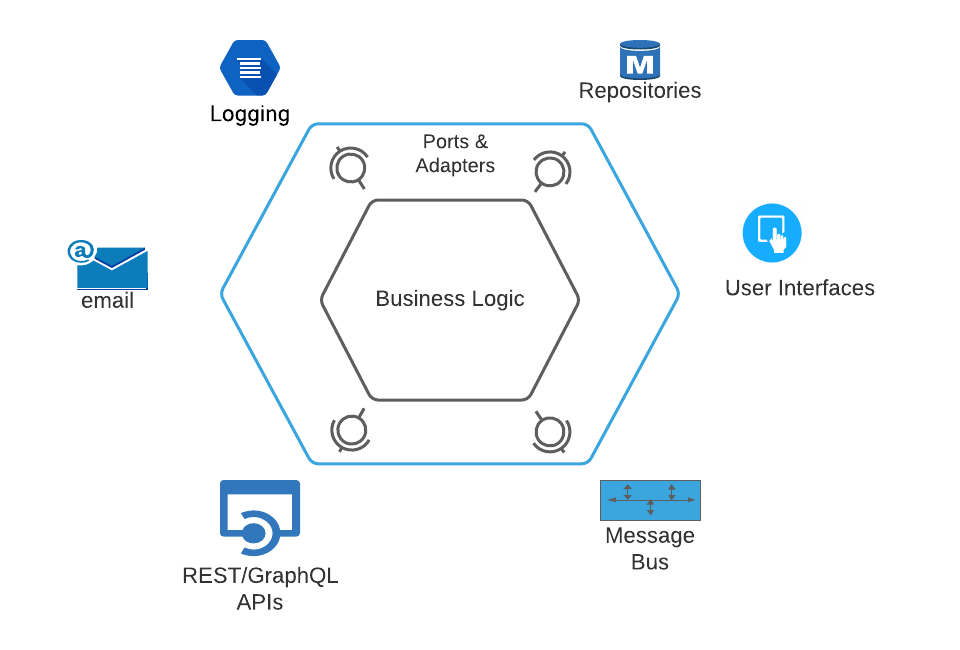
This project presents a simple product catalogue microservice to demonstrate the principles of a hexagonal software architecture. The microservice exposes a RESTful API that allows consuming applications to perform CRUD operations on a product catalogue. The microservice is developed in Golang, and the product catalogue data is persisted in a MongoDB repository.
Prerequisites
- Go 1.27 or higher
- MongoDB
- Go modules
Setup
Clone the repository:
git clone https://github.com/gofiber/recipes.git
cd recipes/hexagonal
Install dependencies:
go mod tidyConfigure the MongoDB connection in
config/config.yaml. The server listens onserver.port(default:8080, a bare number such as8083works too):database: url: "your_mongodb_uri" db: "your_db_name" timeout: 30 server: port: ":8080"
Running the Application
Run the application:
go run main.goThe server will start on
http://localhost:8080.
Endpoints
A product has a code (its identifier), a name and a price.
| Method | URL | Description |
|---|---|---|
| GET | /products | Retrieves all products |
| GET | /products/:code | Retrieves a product by code |
| POST | /products | Creates a new product |
| PUT | /products | Updates the product with the same code |
| DELETE | /products/:code | Deletes a product |
Example Requests
Create a New Product
curl -X POST http://localhost:8080/products -d '{"code": "p-1", "name": "New Product", "price": 100}' -H "Content-Type: application/json"Get All Products
curl -X GET http://localhost:8080/productsGet Product by Code
curl -X GET http://localhost:8080/products/p-1Update a Product
curl -X PUT http://localhost:8080/products -d '{"code": "p-1", "name": "Updated Product", "price": 150}' -H "Content-Type: application/json"Delete a Product
curl -X DELETE http://localhost:8080/products/p-1Hexagonal Architecture
Hexagonal architecture, also known as ports and adapters architecture, is a design pattern used to create loosely coupled application components that can be easily connected to their software environment by means of ports and adapters. This architecture allows an application to be equally driven by users, programs, automated tests, or batch scripts, and to be developed and tested in isolation from its eventual runtime devices and databases.
Additional Information
For more information on hexagonal architecture, you can refer to the following resources: